Pride and Prejudice and Zombies offers exactly what the title promises, but little more. It is the familiar Regency England of Jane Austen’s world: balls, etiquette, chivalry, but with the added issue of rotting corpses which stalk the countryside. Seth Grahame-Smith’s novel of the same name takes the famous romance of feisty Elizabeth Bennet and moody Mr Darcy and places it in a world at the mercy of an insidious zombie outbreak. Life goes on for the aristocracy with romance, marriage and gossip, but young ladies are taught to hide knives in their corsets and stockings, while gentlemen must keep a musket on hand at all times.
This admittedly bizarre concept has given rise to a similarly ridiculous film, but one which at least harbours no illusions about being a serious literary adaptation. The scenes which use the differences between the original Pride and Prejudice and the horror reimagining subtly make up the most effective, amusing parts of the film. For example, an early sequence in which the Bennet sisters chatter excitedly about an upcoming ball while polishing their weapons at the same time is subversive and slick. Another interesting aspect of the social differences of the era is also created. Those who can afford it receive zombie combat training in Japan, while those who cannot settle for lessons in China. The charming young cast includes Lily James, Bella Heathcote and Jack Huston, who elevate the production with likeable performances. The stand out role, however, goes to Matt Smith, whose bumbling and awkward Mr Collins steals every scene he is in with hilarious physical comedy and improvised one-liners which brought the house down several times.
Despite these commendable aspects, however, Pride and Prejudice and Zombies is never sure what mood to create, and tonal missteps in both romantic and action scenes lose their effectiveness accordingly. The bloody fight scenes are not translated well to a period setting, and appear muddled and over the top. Fans of Grahame-Smith’s novel will be satisfied, but Austen herself will be turning in her grave - which would ironically make her a zombie.
Wednesday, 24 February 2016
Friday, 1 January 2016
My Ten Favourite Films of 2015
1. Ex Machina
One of only a few true science-fiction films released this year, Alex Garland's directorial debut is quiet, contemplative and chilling. Seamless special effects combine with unforgettable performances to make us question our very existence, as good sci-fi should.
2. The Look of Silence
Though perhaps less enjoyable than some of the films on this list, Joshua Oppenheimer's follow up to last year's searing The Act of Killing is no less devastating. Watching mass murderers re-enact their killings through the eyes of one victim's family was one of the hardest and most important experiences for audiences this year.
3. Mad Max: Fury Road
Everyone has raved about this film, and George Miller indeed proves that age does not necessarily prevent one from delivering a masterpiece of hand-crafted mayhem and destruction to the mainstream screen, making all other summer blockbusters look MEDIOCRE in comparison.
4. Crimson Peak
So many unforgettable images make up Guillermo Del Toro's latest film, from the young girl creeping through a corridor in her nightdress, to a great haunted mansion sinking into blood red mud. An unusual yet instantly classic gothic horror.
5. The Gift
Marking Joel Edgerton as a promising writer-director as well as an accomplished actor, The Gift is a slow burn of psychological menace and threat, with an eventual climax more horrific than you could ever have imagined.
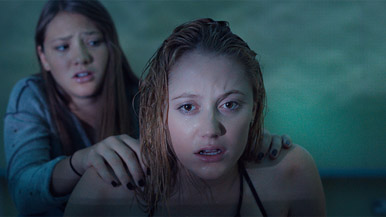
6. It Follows
Despite an unpromising trailer, this indie horror is a chilling allegory for sex, love and death. One of the most terrifying concepts in years combines with excellent cinematography and well-timed scares to create a film far above the calibre of mainstream horror.
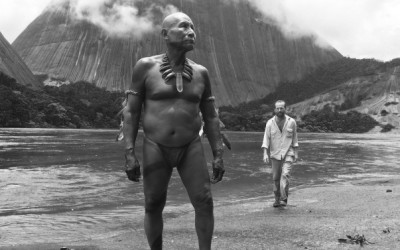
7. Embrace of the Serpent
Shot in lush black and white widescreen, El abrazo de la serpiente received many excellent festival reviews and delivers wisdom, elegance and gravitas in its two-hour runtime. See my full review here.
8. The Diary of a Teenage Girl
A sensitive, realistic and entertaining portrayal of young female sexuality is a rare find, so watch Marielle Heller's passion project for a frank and beautiful coming-of-age tale.
9. The Martian
Though with considerably less peril than the average space-disaster film, seasoned sci-fi great Ridley Scott delivers a well paced adventure with incredible special effects, that hopefully will not discourage future astronauts from venturing to Mars.
10. Jupiter Ascending
Panned by most critics, the latest epic from the Wachowski siblings is nonetheless what the film industry greatly needs: an original, inventive blockbuster with a female lead.
One of only a few true science-fiction films released this year, Alex Garland's directorial debut is quiet, contemplative and chilling. Seamless special effects combine with unforgettable performances to make us question our very existence, as good sci-fi should.
2. The Look of Silence
Though perhaps less enjoyable than some of the films on this list, Joshua Oppenheimer's follow up to last year's searing The Act of Killing is no less devastating. Watching mass murderers re-enact their killings through the eyes of one victim's family was one of the hardest and most important experiences for audiences this year.
3. Mad Max: Fury Road
Everyone has raved about this film, and George Miller indeed proves that age does not necessarily prevent one from delivering a masterpiece of hand-crafted mayhem and destruction to the mainstream screen, making all other summer blockbusters look MEDIOCRE in comparison.
4. Crimson Peak
So many unforgettable images make up Guillermo Del Toro's latest film, from the young girl creeping through a corridor in her nightdress, to a great haunted mansion sinking into blood red mud. An unusual yet instantly classic gothic horror.
5. The Gift
Marking Joel Edgerton as a promising writer-director as well as an accomplished actor, The Gift is a slow burn of psychological menace and threat, with an eventual climax more horrific than you could ever have imagined.
6. It Follows
Despite an unpromising trailer, this indie horror is a chilling allegory for sex, love and death. One of the most terrifying concepts in years combines with excellent cinematography and well-timed scares to create a film far above the calibre of mainstream horror.
7. Embrace of the Serpent
Shot in lush black and white widescreen, El abrazo de la serpiente received many excellent festival reviews and delivers wisdom, elegance and gravitas in its two-hour runtime. See my full review here.
8. The Diary of a Teenage Girl
A sensitive, realistic and entertaining portrayal of young female sexuality is a rare find, so watch Marielle Heller's passion project for a frank and beautiful coming-of-age tale.
9. The Martian
Though with considerably less peril than the average space-disaster film, seasoned sci-fi great Ridley Scott delivers a well paced adventure with incredible special effects, that hopefully will not discourage future astronauts from venturing to Mars.
10. Jupiter Ascending
Panned by most critics, the latest epic from the Wachowski siblings is nonetheless what the film industry greatly needs: an original, inventive blockbuster with a female lead.
Saturday, 28 November 2015
Film Review: Doctor Zhivago + BFI Love
'Turbulent were the times and fiery was the love story of Zhivago, his wife, and the passionate, tender Lara.' Thus gushes the original tagline of Doctor Zhivago, David Lean's rambling 1965 epic, which follows the difficult life of poet and physician Yuri Zhivago. Entering and exiting the story at various intervals are his long-suffering wife Tonya and his mistress Lara, who struggles under the desires of Victor Komarovsky, a rich businessman with dubious motives.
Despite a lengthy runtime of 200 minutes, this is but a fraction of the extensive narrative first published in 1957 by Russian novelist Boris Pasternak. The film misses many crucial details of the original novel, bookended by a cliché Hollywood framing device which provides the rather bleak tale with some sense of satisfying closure. Such trims cause the motivations of many of the characters to be difficult to understand. Zhivago's forgiving nature and romantic soul seem constantly at odds with the cold cynical world around him, and his wife seems impossibly accepting that he should suddenly leave her for another woman. Lara's desire for the corpulent Komarovsky is played too safe to be believable. Lean's attention to detail, however, is meticulous, and still stands up after fifty years despite the picture-postcard portrayal of a bloody revolution. Maurice Jarre's 'Lara's Theme' is iconic, if repetitive.
In the end, strangled by Production Code censorship, Lean's film rings emotionally cold compared with the charged remake from 2002. But it is nonetheless a classic, a triumph of colossal set design, daring vision and the clout of the studio budget. Its melancholy comes from the memory of the recently late Omar Sharif, his death echoing the film itself which heralded the end of the age of sweeping epics made to be seen on the big screen. I am glad I got to see it up there when I did, thanks to the BFI's Love season here.
Despite a lengthy runtime of 200 minutes, this is but a fraction of the extensive narrative first published in 1957 by Russian novelist Boris Pasternak. The film misses many crucial details of the original novel, bookended by a cliché Hollywood framing device which provides the rather bleak tale with some sense of satisfying closure. Such trims cause the motivations of many of the characters to be difficult to understand. Zhivago's forgiving nature and romantic soul seem constantly at odds with the cold cynical world around him, and his wife seems impossibly accepting that he should suddenly leave her for another woman. Lara's desire for the corpulent Komarovsky is played too safe to be believable. Lean's attention to detail, however, is meticulous, and still stands up after fifty years despite the picture-postcard portrayal of a bloody revolution. Maurice Jarre's 'Lara's Theme' is iconic, if repetitive.
In the end, strangled by Production Code censorship, Lean's film rings emotionally cold compared with the charged remake from 2002. But it is nonetheless a classic, a triumph of colossal set design, daring vision and the clout of the studio budget. Its melancholy comes from the memory of the recently late Omar Sharif, his death echoing the film itself which heralded the end of the age of sweeping epics made to be seen on the big screen. I am glad I got to see it up there when I did, thanks to the BFI's Love season here.
Monday, 26 October 2015
Steve Jobs - The New Citizen Kane?
"Can a great man... be a good man?" Thus poses a tagline for Steve Jobs, the new biopic drama on the life and times of Apple founder and billionaire Steve Jobs, written and directed by the powerhouse couple Aaron Sorkin and Danny Boyle. Despite only being days old on the US cinema circuit and not reaching UK shores until 13th November, the film is already drawing a significant amount of attention for its similarities to another film about the life of a troubled rich man attempting to find meaning in the world. Orson Welles's 1941 masterpiece Citizen Kane follows a similar trajectory of a toweringly successful individual who struggles with stunted emotion and the emptiness which comes with extreme wealth. With an excellent pedigree behind the camera and a powerful leading man in Michael Fassbender, could this new film come close to Welles's multifaceted genius creation?
It is true that both films discard regular narrative structures in favour of telling their stories in more unconventional ways. Kane is structured into different recollections from those closest to the recently deceased magnate, including his second wife, his butler, and a rare friend. Sorkin structures Steve Jobs in a similar way, centering the scenes around three pivotal Apple product launches throughout the 80s and 90s. With both directors, however, it is what happens behind the scenes of the lives of these great men that interests them. What lies at the heart of Kane and Jobs as characters is a sense of abandonment carried through from childhood. Both are insecure and crave love, but insist upon attaining it on their own terms, subsequently estranging their friends and loved ones.
Despite so many shared qualities, sadly, if we compare just based on the quality of the films, it is looking highly unlikely that Jobs could come close to matching the hypnotic deep focus and fascinating sound techniques which have had Kane ranked as the greatest film ever made for over fifty years. However, it is interesting to see that the issues Kane engages with are still relevant to people and films today. With the world, companies, and personal wealth only getting bigger for each new global success, it seems that we still have much to learn. The moral of both films is clear, however: if we do not, we will die alone, a bleak forecast which no amount of money can prevent.
It is true that both films discard regular narrative structures in favour of telling their stories in more unconventional ways. Kane is structured into different recollections from those closest to the recently deceased magnate, including his second wife, his butler, and a rare friend. Sorkin structures Steve Jobs in a similar way, centering the scenes around three pivotal Apple product launches throughout the 80s and 90s. With both directors, however, it is what happens behind the scenes of the lives of these great men that interests them. What lies at the heart of Kane and Jobs as characters is a sense of abandonment carried through from childhood. Both are insecure and crave love, but insist upon attaining it on their own terms, subsequently estranging their friends and loved ones.
Despite so many shared qualities, sadly, if we compare just based on the quality of the films, it is looking highly unlikely that Jobs could come close to matching the hypnotic deep focus and fascinating sound techniques which have had Kane ranked as the greatest film ever made for over fifty years. However, it is interesting to see that the issues Kane engages with are still relevant to people and films today. With the world, companies, and personal wealth only getting bigger for each new global success, it seems that we still have much to learn. The moral of both films is clear, however: if we do not, we will die alone, a bleak forecast which no amount of money can prevent.
Monday, 28 September 2015
Whitewashing in Pan
The lack of diversity of characters and opportunities for actors of colour is a problem Hollywood has been struggling with, or at least appearing to, for decades. Despite recent advances white, and predominately male actors still dominate in the world's biggest films, with interesting and important roles for those who do not fit into this category are few and far between. Beginning the pre-Oscars run of cinema releases, Walt Disney's beloved, if retrospectively worrying, adventure Peter Pan has become the latest literary classic to receive an overblown CGI makeover, this time at the hands of Anna Karenina director Joe Wright. The casting of Rooney Mara as Tiger Lily is the most troubling recent example of Hollywood's whitewashing. Mara is an extremely talented actress in her own right, but as a white 30-year-old woman, bears little resemblance to J. M. Barrie's pre-adolescent Native American princess. Many have already criticised the choice, the unashamed denial of a high-profile role to an actual Native American actress causing anger among audiences and critics alike. It has recently come to light that Native American actress Kawennáhere Devery Jacobs reportedly auditioned for the role, but was turned down as producers were specifically seeking a Caucasian actress.
The original Disney animation is riddled with Native American stereotypes, and is difficult to rewatch as an adult. However, Pan's director Joe Wright has attempted to placate critics by saying that his film is “very international and multi-racial, effectively challenging audiences’ preconceived notions of Neverland and reimagining the environment.” It is disappointing to see such a glaring missed opportunity for a respectful representation of Native Americans in the middle of a film which claims to be 'international.' Even Mara's make up and dress are overly colourful and exotic, reeking of far too many quasi-'Indian' costumes. The far-reaching consequences of this include young Native American girls effectively being told that, in order to be represented on the big screen, they must be tall, thin, and white. This also sets a standard in the industry for the continued whitewashing of characters of colour, and a continued reluctance to balance the enormous budgets of current blockbusters on the shoulders of less-known actors who may not guarantee a return.
Little can be done for Pan now, and this vicious cycle will continue unless the problem is fully addressed by studios and audiences alike. The growing demand for diversity on screen cannot be ignored, and Hollywood revenue may suffer if it does not reciprocate. Mara is a favourite to earn an Oscar nomination for her role in Carol. Since her breakthrough role in David Fincher's The Social Network, she has demonstrated a clear ability of making better choices, and will hopefully grow out of this episode, even if Peter Pan does not.
The original Disney animation is riddled with Native American stereotypes, and is difficult to rewatch as an adult. However, Pan's director Joe Wright has attempted to placate critics by saying that his film is “very international and multi-racial, effectively challenging audiences’ preconceived notions of Neverland and reimagining the environment.” It is disappointing to see such a glaring missed opportunity for a respectful representation of Native Americans in the middle of a film which claims to be 'international.' Even Mara's make up and dress are overly colourful and exotic, reeking of far too many quasi-'Indian' costumes. The far-reaching consequences of this include young Native American girls effectively being told that, in order to be represented on the big screen, they must be tall, thin, and white. This also sets a standard in the industry for the continued whitewashing of characters of colour, and a continued reluctance to balance the enormous budgets of current blockbusters on the shoulders of less-known actors who may not guarantee a return.
Little can be done for Pan now, and this vicious cycle will continue unless the problem is fully addressed by studios and audiences alike. The growing demand for diversity on screen cannot be ignored, and Hollywood revenue may suffer if it does not reciprocate. Mara is a favourite to earn an Oscar nomination for her role in Carol. Since her breakthrough role in David Fincher's The Social Network, she has demonstrated a clear ability of making better choices, and will hopefully grow out of this episode, even if Peter Pan does not.
Tuesday, 18 August 2015
The Hidden Mexico of Cartel Land
You'd be forgiven for not knowing about the murder of a dozen lime pickers in Mexico's southern Michoacán state two years ago. But for those who fight against the drug cartels which terrorise hundreds of Mexican towns, it is just one of the many reasons why they initiate vigilante justice against gangs. The situation is on the rise in Mexico and America. Read my full review here, written for and published on entertainment website The Upcoming.
Monday, 20 July 2015
Nolan, Spielberg, and the Battle for Ready Player One
It is an adage for the modern age: nobody likes watching someone else play video games. And yet, for most of the duration of Ernest Cline's geektastic cult novel, Ready Player One, we do just that. It is a sign of our modern times powered by simulation and the internet that the book spent much of its early life as a New York Times best seller. The story is exciting, complex, and rich in detail as we follow the story of Wade Watts, a lonely teenager in the near future who lives most of his life inside the OASIS, a vast virtual-reality network into which most of the world is logged in. Wade, under the screen name 'Parzival', is just one of the millions of people across the world engaged in a quest to gain control of the OASIS and its infinite expanse and power, a quest left by the network's late creator James Halliday, a reclusive Steve Jobs/Howard Hughes billionaire who has woven a series of 'Easter eggs' into the OASIS for players to find. What ensues is a fantastic adventure-quest for the arcade and iPad generations, but only for them, as gaming makes up such an integral part of the novel that it would be difficult to understand without some knowledge of recent gaming and technological history.
The film rights for Ready Player One were obtained by Warner Bros. a year before the novel's publication. Having first read it when it was rumoured that Interstellar's Christopher Nolan would be directing the adaptation, it was easy for me to see how the director would simultaneously handle the vast scale of both the novel's real world and it's virtual one, while at the same time incorporating the great detail which makes up every scene. The director has never had any trouble mixing the epic and the intimate, and so could have easily handled such an expansive work. Having helmed the most recent trilogy of Batman films, Nolan also has at least some experience of appeasing nerdy fans, who will no doubt scan every shot of the film for misrepresentations of their favourite movies or games.
However, despite his more than adequate credentials, it is not to be, as it was recently announced that Steven Spielberg had signed on to direct. Following completion of The BFG, Spielberg will be returning to Warner Bros. for the first time since A.I.: Artificial Intelligence. As a filmmaker whose scale of production arguably exceeds Nolan's, it will be interesting to see how the director will interpret the novel, and the project may be a historical first as Spielberg prepares to adapt for the screen a book which mentions him by name, as one of OASIS creator Halliday's favourite filmmakers. While I was disappointed at the departure of Nolan, it is clear that the novel lends itself almost entirely to Spielberg, from his creative signatures to his intrinsic place in popular culture. The clues to the egg's location are based on Halliday's obsession with the eighties of his childhood, from Dungeons & Dragons to the Commodore 64 and John Hughes. Spielberg will essentially be making a film which worships his heyday of some of cinema's biggest home runs and the tastes which inspired them. Look out for the film's new title: Steven Spielberg was Amazing in the Eighties, by Steven Spielberg.
The film rights for Ready Player One were obtained by Warner Bros. a year before the novel's publication. Having first read it when it was rumoured that Interstellar's Christopher Nolan would be directing the adaptation, it was easy for me to see how the director would simultaneously handle the vast scale of both the novel's real world and it's virtual one, while at the same time incorporating the great detail which makes up every scene. The director has never had any trouble mixing the epic and the intimate, and so could have easily handled such an expansive work. Having helmed the most recent trilogy of Batman films, Nolan also has at least some experience of appeasing nerdy fans, who will no doubt scan every shot of the film for misrepresentations of their favourite movies or games.
However, despite his more than adequate credentials, it is not to be, as it was recently announced that Steven Spielberg had signed on to direct. Following completion of The BFG, Spielberg will be returning to Warner Bros. for the first time since A.I.: Artificial Intelligence. As a filmmaker whose scale of production arguably exceeds Nolan's, it will be interesting to see how the director will interpret the novel, and the project may be a historical first as Spielberg prepares to adapt for the screen a book which mentions him by name, as one of OASIS creator Halliday's favourite filmmakers. While I was disappointed at the departure of Nolan, it is clear that the novel lends itself almost entirely to Spielberg, from his creative signatures to his intrinsic place in popular culture. The clues to the egg's location are based on Halliday's obsession with the eighties of his childhood, from Dungeons & Dragons to the Commodore 64 and John Hughes. Spielberg will essentially be making a film which worships his heyday of some of cinema's biggest home runs and the tastes which inspired them. Look out for the film's new title: Steven Spielberg was Amazing in the Eighties, by Steven Spielberg.
Subscribe to:
Posts (Atom)