Friday, 30 September 2016

Film Review: Things to Come

From The Upcoming: http://www.theupcoming.co.uk/2016/09/01/things-to-come-movie-review/

In Mia Hansen-Løve’s thoughtful, detailed drama, Isabelle Huppert plays Nathalie, a philosophy professor whose comfortable home life is turned upside-down over the course of a summer, causing her to rethink both her own life and her longstanding philosophical convictions.

One day, Nathalie battles her way to her teaching post through a mob of angry students. The next, her pipe-smoking husband leaves her; the breakup scene is brief but realistic, made all the more powerful by Huppert’s performance. Nathalie admits she was prepared and does not seem upset, only tearing up when realising how much she will miss the family holiday home in Brittany. More tears are shed, however, as, one by one, things start to go wrong in her serene life.

Hansen-Løve perfectly captures Nathalie’s confusion as she drifts through a world in which everyone is younger, more adventurous and less cynical than she. Marketers want to give her classic textbook a trashy modern makeover; her students strike, riot and protest for a cause she cannot remember; her children begin having their own children. We only glimpse her husband’s new lover, but it goes unsaid that she is younger. Nathalie’s ageing mother exists as if to warn her daughter of what she may be in danger of becoming: a presumably unsuccessful actress suffering from frequent depressive episodes, she lives in the past and stays sequestered in her house in a state of faded glamour, like Edie Beale of Grey Gardens.

The film’s only misstep is involving the constant presence of a black cat, adopted by Nathalie from her mother. The subplot leads nowhere, and the clumsy symbolism belongs to a less-accomplished work. Nevertheless, Things to Come resonates with its simplicity and honesty, and Huppert creates a memorable character. Her sweeping remark, “after 40, women are fit for the trash,” is a bleak, cynical statement at odds with a practical and positive movie.

Monday, 29 August 2016

Film Review: The Wave

The majesty of Norway's unique fjords are a sight marvelled at by locals and travellers alike. However, these beautiful geographic formations hide a deadly secret: many are ticking time bombs. In 1934, a rockslide deposited almost two million cubic metres of rock into the Tafjorden, creating a local tsunami which, funnelled by the fjord's narrow cliffs, reached a height of 62 metres. The village of Tafjord was obliterated by the wave, killing 40 people in one of Norway's worst recent natural disasters. Last year, director Roar Uthaug imagined the event on a grander scale in the present day, creating The Wave, a blockbuster said to be "Scandinavia's first disaster movie."

With echoes of past great, if unsubtle disaster movies such as The Day After Tomorrow and 2012, Uthaug appears to be paving the way to becoming Norway's answer to Roland Emmerich, and has already signed his first Hollywood film deal. The film boasts a budget a fraction of its American counterparts, yet with special effects, performances and thrills to equal that of any veteran disaster director.

He nails the formula in the film's brisk 105-minute runtime: the slow buildup of tension, as the only man aware of the impending disaster is ignored, the event, a seat-rattling explosion of CGI water, and the climax, an intense slow-burn in which the scattered family must its way back together. Genre cliches, such as the child in peril and the last minutes dash before the disaster, are used cleverly so as to still seem original. A few subtle moments of wry self-awareness prevent the film from becoming too portentous. A clever pre-event scene involves an early-warning analyst watching a horror movie on his laptop. As the victim is unaware of the killer behind her, so too is he oblivious of the warning lights illuminating around him. The film's modest international success so far is a hopeful sign of an increasing interest in foreign, independent films by mainstream audiences. May it continue.

Saturday, 30 July 2016

The Evolution of Tarzan's Female Gaze

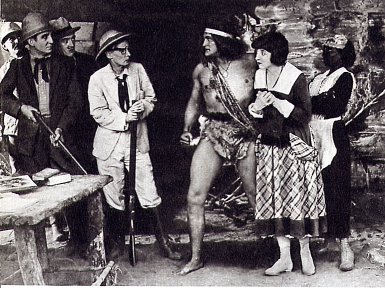
1918: The first Tarzan of the Apes

The first and most faithful Tarzan adaptation, this silent film introduced cinema audiences to the vine-swinging hero, but was subject to the rigorous censorship of the era. Cut scenes included "woman standing over kettle showing breasts" and "first two scenes of maid on man's lap in closet." Little room for anything too risqué then, and out-of-shape Tarzan actor Elmo Lincoln was unlikely to inspire many erotic fantasies.


1932: Tarzan, the Ape Man

The most enduring and archetypal Tarzan incarnation came in 1932 with five-time Olympic medallist Johnny Weissmuller. The buff swimmer was extremely popular among female audiences, and paired with Maureen O'Sullivan for six films during the 30s and 40s, with the most memorable being the pre-code Tarzan and His Mate, which features a nude underwater dance. This controversial film marked the last Tarzan film aimed at an adult audience.


1938: Tarzan's Revenge

Two more Olympic athletes led the cast of the low-budget standalone Tarzan's Revenge, decathlete Glenn Morris and backstroker/party girl Eleanor Holm. While both were slammed for their lack of acting talent, they were praised for looking fabulous in their loincloths. Apparently with little respect for women, Morris fell in love with Leni Riefenstahl, Hitler's famous propaganda film-maker, at the Berlin Olympics. After he was awarded his medal in the stadium he apparently grabbed her, tore open her blouse and kissed her breasts in front of the stadium spectators.


1984: Greystoke: The Legend of Tarzan, Lord of the Apes

A more inspired film than its predecessors, this clumsily titled reboot features over five minutes of full-frontal male nudity, but is largely aimed at the male action movie market. Nevertheless, the second half of the film, which tracks Tarzan as he attempts to adjust to his new civilised life, has little in the way of action, and its emotional core may appeal to women more than men.


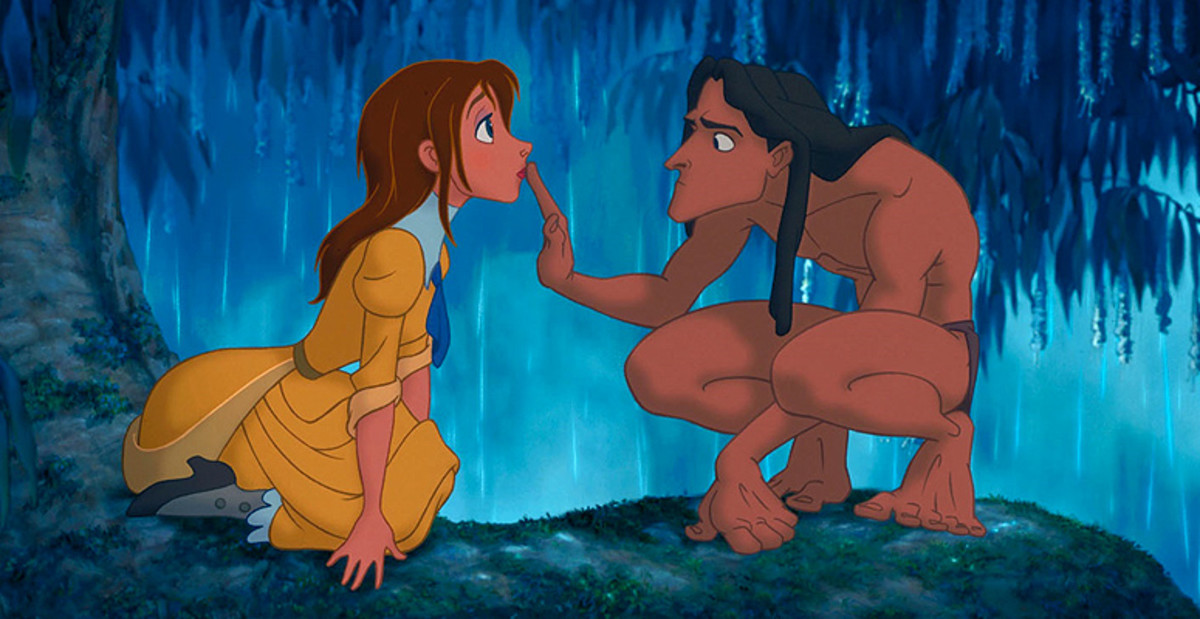
1999: Walt Disney's Tarzan

This beloved animated film takes Tarzan's origin story and simplifies it to an uplifting tale about wilderness adventures and what it means to be different. However, beneath the Disney innocence some have recognised a lustful undercurrent that has caused the film to be labelled by Buzzfeed as the thirstiest Disney movie ever. It is true that the repressed Victorian Jane all but drools over the untamed Tarzan in several scenes. However, the film's U rating prevents anything too suggestive, and it is romance, rather than sex, that is the focus here.


2016: The Legend of Tarzan

The marketing campaign for the ape-man's latest screen outing has been dominated largely by high-res stills of star Alexander Skarsgård posing shirtless in the jungle, all the better to show off his chiselled abs. In a cinematic world in which exposure of women's bodies has become the norm, director David Yates has cleverly tapped into the movie industry's dearth of male nudity to the delight of many female cinema-goers. We as an audience join Margot Robbie's Jane in lusting after her husband, with Tarzan as the object of desire. Despite this obvious reversal of roles, however, their relationship is an equal one, with respect and power equal on both sides. Here, as it should be, female sexuality is celebrated, not condemned.

Monday, 13 June 2016

The Birth of a Nation - 1915 vs 2016

It's been the pride and shame of the film industry for over a hundred years - D. W. Griffith's epic, 3-hour long blockbuster detailing the end of the American Civil War, the death of Abraham Lincoln and the rise of the Ku Klux Klan. It became legendary, not as a good film, but as a great film that was on the side of evil. Griffith's pioneering film techniques set the standard for every film since and created a powerful argument, unfortunately one that advocated white supremacy and presented African Americans, portrayed in blackface, as unclean, unintelligent and sexually aggressive. It is offered to film students as a challenge to separate style over content, and arguments remain to this day as to whether its filmic and technical importance should overshadow its racism.

This year, however, among the recurrence of whitewashed Hollywood blockbusters, most notably Alex Proyas's Gods of Egypt, has seen the emergence of a film which directly counters Griffith's unwatchably racist portrayal of freed slaves. Nate Parker helms and stars in the film of the same name which portrays the birth of a very different nation, in which a young slave preacher is taken on an inter-county preaching tour and, bearing witness to the full horror of slavery, is compelled to lead in a different way. The film is both spiritual and intellectual in its portrayal of the protagonist and his intense theological convictions.

While Griffith's film existed to inflame racial hatred and paint a comforting portrait of history for white people, Parker's answer exists to challenge our view of the past and debate the morality of violence and the ongoing struggle for justice and equality for black people in America. It has both historical and contemporary resonance, and, along with Steve McQueen's acclaimed 12 Years a Slave, signifies the continuation of an era in which we beginning to see, at last, truer representations of American slavery in all their horror.

Wednesday, 24 February 2016

Pride and Prejudice and Zombies Preview Screening

Pride and Prejudice and Zombies offers exactly what the title promises, but little more. It is the familiar Regency England of Jane Austen’s world: balls, etiquette, chivalry, but with the added issue of rotting corpses which stalk the countryside. Seth Grahame-Smith’s novel of the same name takes the famous romance of feisty Elizabeth Bennet and moody Mr Darcy and places it in a world at the mercy of an insidious zombie outbreak. Life goes on for the aristocracy with romance, marriage and gossip, but young ladies are taught to hide knives in their corsets and stockings, while gentlemen must keep a musket on hand at all times.

This admittedly bizarre concept has given rise to a similarly ridiculous film, but one which at least harbours no illusions about being a serious literary adaptation. The scenes which use the differences between the original Pride and Prejudice and the horror reimagining subtly make up the most effective, amusing parts of the film. For example, an early sequence in which the Bennet sisters chatter excitedly about an upcoming ball while polishing their weapons at the same time is subversive and slick. Another interesting aspect of the social differences of the era is also created. Those who can afford it receive zombie combat training in Japan, while those who cannot settle for lessons in China. The charming young cast includes Lily James, Bella Heathcote and Jack Huston, who elevate the production with likeable performances. The stand out role, however, goes to Matt Smith, whose bumbling and awkward Mr Collins steals every scene he is in with hilarious physical comedy and improvised one-liners which brought the house down several times.

Despite these commendable aspects, however, Pride and Prejudice and Zombies is never sure what mood to create, and tonal missteps in both romantic and action scenes lose their effectiveness accordingly. The bloody fight scenes are not translated well to a period setting, and appear muddled and over the top. Fans of Grahame-Smith’s novel will be satisfied, but Austen herself will be turning in her grave - which would ironically make her a zombie.

Friday, 1 January 2016

My Ten Favourite Films of 2015

1. Ex Machina

One of only a few true science-fiction films released this year, Alex Garland's directorial debut is quiet, contemplative and chilling. Seamless special effects combine with unforgettable performances to make us question our very existence, as good sci-fi should.


2. The Look of Silence

Though perhaps less enjoyable than some of the films on this list, Joshua Oppenheimer's follow up to last year's searing The Act of Killing is no less devastating. Watching mass murderers re-enact their killings through the eyes of one victim's family was one of the hardest and most important experiences for audiences this year.


3. Mad Max: Fury Road

Everyone has raved about this film, and George Miller indeed proves that age does not necessarily prevent one from delivering a masterpiece of hand-crafted mayhem and destruction to the mainstream screen, making all other summer blockbusters look MEDIOCRE in comparison.


4. Crimson Peak

So many unforgettable images make up Guillermo Del Toro's latest film, from the young girl creeping through a corridor in her nightdress, to a great haunted mansion sinking into blood red mud. An unusual yet instantly classic gothic horror.


5. The Gift

Marking Joel Edgerton as a promising writer-director as well as an accomplished actor, The Gift is a slow burn of psychological menace and threat, with an eventual climax more horrific than you could ever have imagined.


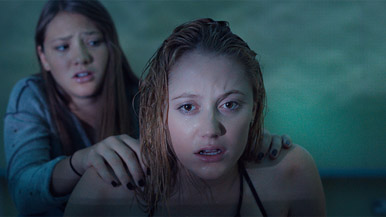
6. It Follows

Despite an unpromising trailer, this indie horror is a chilling allegory for sex, love and death. One of the most terrifying concepts in years combines with excellent cinematography and well-timed scares to create a film far above the calibre of mainstream horror.


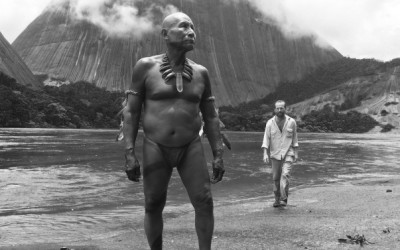
7. Embrace of the Serpent

Shot in lush black and white widescreen, El abrazo de la serpiente received many excellent festival reviews and delivers wisdom, elegance and gravitas in its two-hour runtime. See my full review here.


8. The Diary of a Teenage Girl

A sensitive, realistic and entertaining portrayal of young female sexuality is a rare find, so watch Marielle Heller's passion project for a frank and beautiful coming-of-age tale.


9. The Martian

Though with considerably less peril than the average space-disaster film, seasoned sci-fi great Ridley Scott delivers a well paced adventure with incredible special effects, that hopefully will not discourage future astronauts from venturing to Mars.


10. Jupiter Ascending

Panned by most critics, the latest epic from the Wachowski siblings is nonetheless what the film industry greatly needs: an original, inventive blockbuster with a female lead.

Saturday, 28 November 2015

Film Review: Doctor Zhivago + BFI Love

'Turbulent were the times and fiery was the love story of Zhivago, his wife, and the passionate, tender Lara.' Thus gushes the original tagline of Doctor Zhivago, David Lean's rambling 1965 epic, which follows the difficult life of poet and physician Yuri Zhivago. Entering and exiting the story at various intervals are his long-suffering wife Tonya and his mistress Lara, who struggles under the desires of Victor Komarovsky, a rich businessman with dubious motives.

Despite a lengthy runtime of 200 minutes, this is but a fraction of the extensive narrative first published in 1957 by Russian novelist Boris Pasternak. The film misses many crucial details of the original novel, bookended by a cliché Hollywood framing device which provides the rather bleak tale with some sense of satisfying closure. Such trims cause the motivations of many of the characters to be difficult to understand. Zhivago's forgiving nature and romantic soul seem constantly at odds with the cold cynical world around him, and his wife seems impossibly accepting that he should suddenly leave her for another woman. Lara's desire for the corpulent Komarovsky is played too safe to be believable. Lean's attention to detail, however, is meticulous, and still stands up after fifty years despite the picture-postcard portrayal of a bloody revolution. Maurice Jarre's 'Lara's Theme' is iconic, if repetitive.

In the end, strangled by Production Code censorship, Lean's film rings emotionally cold compared with the charged remake from 2002. But it is nonetheless a classic, a triumph of colossal set design, daring vision and the clout of the studio budget. Its melancholy comes from the memory of the recently late Omar Sharif, his death echoing the film itself which heralded the end of the age of sweeping epics made to be seen on the big screen. I am glad I got to see it up there when I did, thanks to the BFI's Love season here.